
When gene regulation goes wrong: uncovering the origins of leukemia
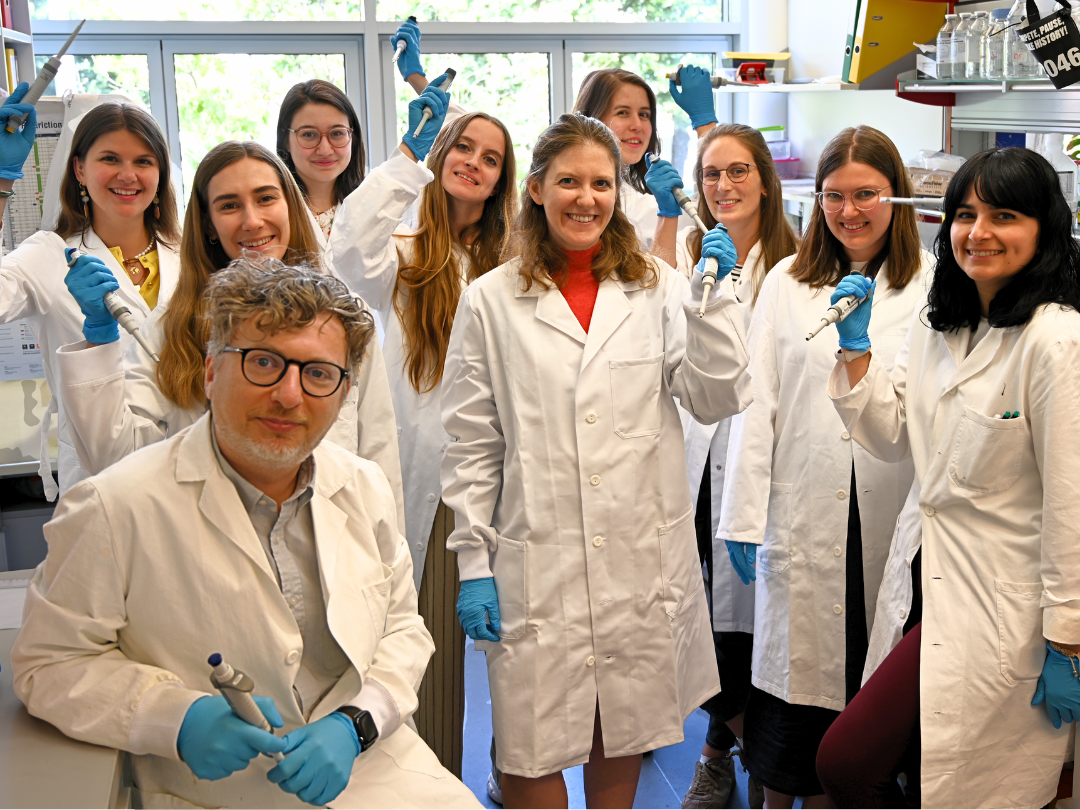
B cell development is a carefully controlled process. Genes must be switched on and off at the right time and in the right amount for healthy immune cells to form. When this precise sequence of events is altered, leukemia can develop instead. In a new project funded by the Austrian Science Fund (FWF), Davide Seruggia and his team will use a systems biology approach to study this process in unprecedented detail. Their ultimate goal is to understand how small genetic changes in regulatory regions can affect B cell development and increase the risk of leukemia.
In Simple Terms
– Master regulators switch genes on and off at the right time and in the right amount to ensure B cells develop correctly.
– Errors in gene regulation can impair B cell development and lead to leukemia.
– Davide Seruggia’s team will study how small genetic changes affect master regulators of B cell development and contribute to leukemia.
B cells are part of the immune system and produce antibodies to fight viruses, bacteria and other threats. They develop from stem cells in the bone marrow through a carefully controlled step-wise process.
Key proteins, known as “master regulators”, guide this process by switching the right set of genes on and off, at the right time. “We know quite well how these master regulators orchestrate B cell development,” explains Davide Seruggia. “But one important question remains: how are master regulators themselves regulated?”
This matters because even small changes in their activity can disrupt B cell development and predispose to leukemia development. Seruggia and his team now want to understand how this happens using a new method they recently developed, called CRISPR-Millipede.
“With this technology, we can now study gene regulatory regions at unprecedented resolution,” explains Seruggia. “It is like looking at each individual brushstroke in a painting and how it contributes to the whole composition.”
The team will use CRISPR-Millipede to examine the regulatory regions surrounding a master regulator. Their goal is to understand how single genetic variants can affect the way gene-regulating proteins bind to DNA and control gene activity.
By doing so, the project might reveal how B cell development is controlled at the genetic level, and how tiny changes in this control system can set the stage for leukemia.
“This grant will help achieve one of our lab’s missions, understanding how small genetic variants predispose to leukemia,” says Seruggia. “I want to thank my team for their continued effort and dedication, and of course the Austrian Science Fund for their support.”
About the Austrian Science Fund
The Austrian Science Fund (FWF) is Austria’s central funding organization for basic research. FWF Individual Projects provide flexibility and freedom to implement pioneering projects in all disciplines of basic research. They provide funding to carry out a research project that is thematically and temporally limited and to address specific research questions. Selection is based on scientific excellence and an international peer-review process.