
Mechanism of leukemia predisposition unraveled
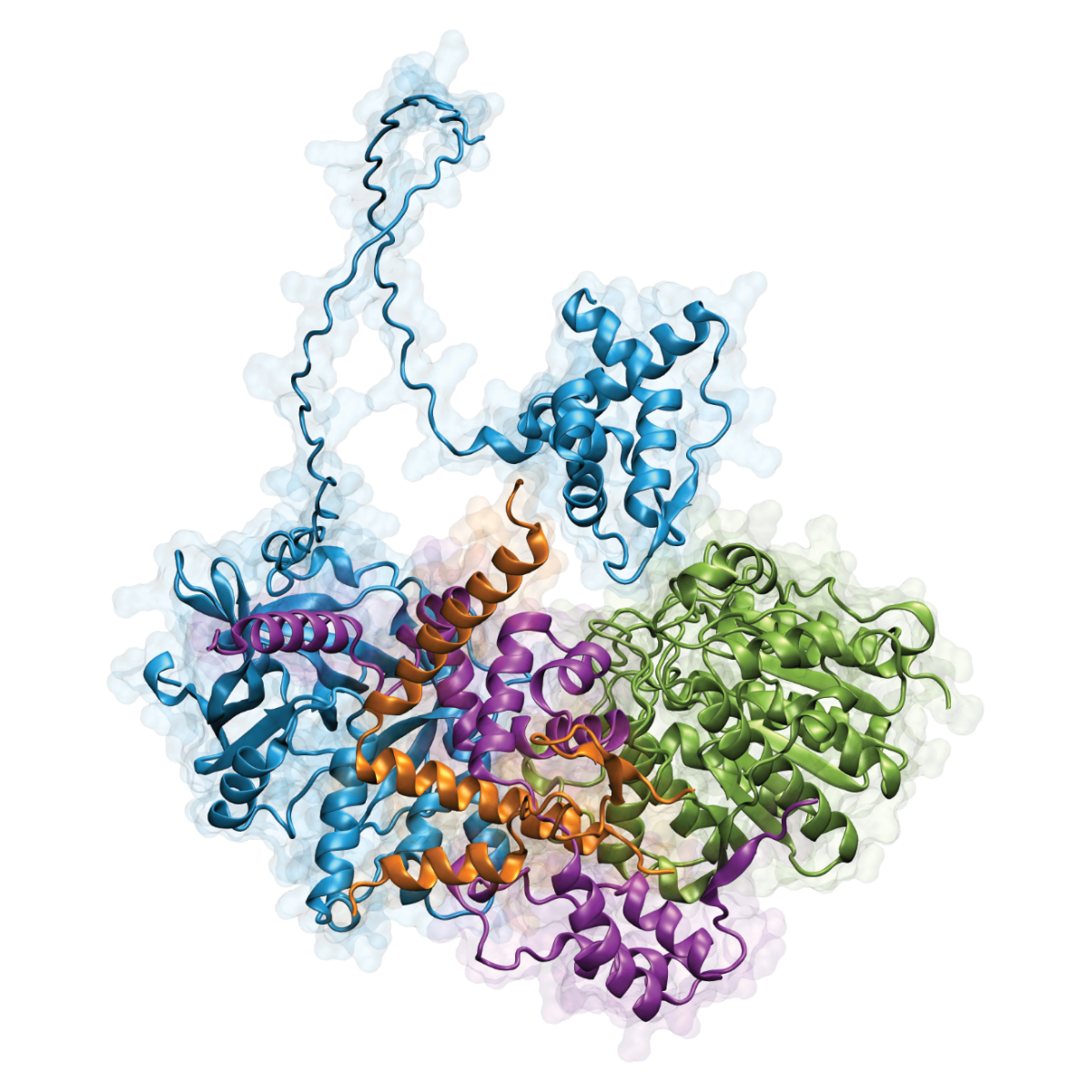
(Vienna, 24.06.2026) – Spontaneous genetic mutations can disrupt normal blood development and drive pediatric leukemia. In addition to these acquired mutations, inherited genetic variants can also increase leukemia risk, but the underlying molecular mechanisms remain poorly understood. A new study reveals how the protein ARID5B controls gene expression to safeguard B cell development and how genetic variants in this protein might contribute to leukemia susceptibility. Published in Nucleic Acids Research, the study provides the first detailed characterization of ARID5B’s function and offers new insights into how its loss may predispose children to the development of B cell leukemia.
In Simple Terms
– Inherited genetic mutations that can disrupt normal blood development and predispose to pediatric leukemia remain poorly understood.
– ARID5B safeguards B cell development, and small variants in this protein could contribute to leukemia susceptibility.
– These findings highlight a previously unkown molecular mechanism for leukemia predisposition in children.
Like many childhood cancers, leukemia begins when normal development goes awry. Genetic alterations trap cells in an immature state, where they continue to divide uncontrollably instead of developing into fully functional cells. For decades, scientists have studied how spontaneous genetic mutations can drive leukemia development. However, inherited genetic variants that can predispose to leukemia remains poorly understood.
In particular, small variations associated with ARID5B are some of the most significant risk factors for developing B cell acute lymphoblastic leukemia (B-ALL), the most common subtype of childhood leukemia. However, ARID5B’s normal function—and more importantly, how it contributes to leukemia development—remained unknown.
A new study led by Ana Kutschat in the laboratory of Davide Seruggia at St. Anna Children’s Cancer Research Institute (St. Anna CCRI) and CeMM Research Center for Molecular Medicine of the Austrian Academy of Sciences now sheds light on how ARID5B works. By combining advanced molecular analyses with AI-based predictions of protein structure and interactions, the researchers dissected ARID5B’s function for the first time and uncovered how ARID5B may set the stage for leukemia to develop.
A Close Partnership
One of the study’s key findings was the identification of ARID5B’s closest molecular partners. The team discovered that ARID5B forms a previously unknown protein complex together with MIER1, C16ORF87, and either HDAC1 or HDAC2. Using the AI-based tool AlphaFold, the researchers predicted how these proteins interact, providing important clues about how the complex functions. They also showed that removing ARID5B causes the entire complex to fall apart.
The researchers found that this protein complex binds to key genes that control how B cells function and develop. ARID5B acts as a bridge, recruiting HDAC1 and HDAC2 to switch B cell specific genes.
Without ARID5B, HDAC1 and HDAC2 can no longer perform their function. As a result, B cell function is impaired. This may explain why certain ARID5B variants make B cells more vulnerable to becoming leukemic when pro-cancer mutations occur.
First Step Toward Understanding Leukemia Predisposition
While the study reveals for the first time how ARID5B works in healthy cells, further research will investigate how specific ARID5B variants alter B cell behavior and increase leukemia risk.
“This is an important first step,” says Ana Kutschat, first author of the study. “Now we understand what ARID5B normally does, we can begin to study how its function is disrupted, and what effects it has.”
Understanding ARID5B’s role in creating the conditions for leukemia development could also open new therapeutic opportunities.
“Understanding the molecular mechanisms behind leukemia predisposition has two main benefits. On one side, we identify new factors contributing to the disease, adding up new potential targets for therapy,” explains Davide Seruggia. “At the same time, we learn new biology regarding how normal B cells develop.”
More broadly, the findings highlight that cancer-driving mutations alone may not be enough to trigger leukemia—cells must first be primed for the disease to take hold.
Publication
Kutschat, A. P., Frommel, F., Santini, B. L., Müller, S., Batty, P., Awasthi, A., Karbon, G., Superti-Furga, G., Seruggia, D. Leukemia risk factor ARID5B Coordinates HDAC-Mediated Transcriptional Repression. Nucleic Acids Res 44, 224 (2026). https://doi.org/10.1093/nar/gkag628
Funding: This work was supported by the Austrian Science Fund (FWF) and the European Research Council (ERC).